
Key Takeaways
- A pediatric eye exam checks vision, eye health, and development at every age.
- Back-to-school season is a good time to schedule or update your child’s exam.
- Myopia is common in school-age kids and can be managed with early action.
- Signs like squinting, eye rubbing, or avoiding reading are worth taking seriously.
- An eye doctor in Aurora can create a care plan that fits your child’s needs.
Vision and Learning Go Hand-in-Hand
Your child may be sitting in class every day, paying attention, trying hard, and still struggling at school. That’s because, when kids have trouble seeing clearly, reading feels harder, focusing takes more effort, and keeping up with lessons becomes a daily challenge. At Envision Eye Care in Aurora, we see this pattern often, and it’s one of the biggest reasons why a pediatric eye exam is so important before the start of the school year.
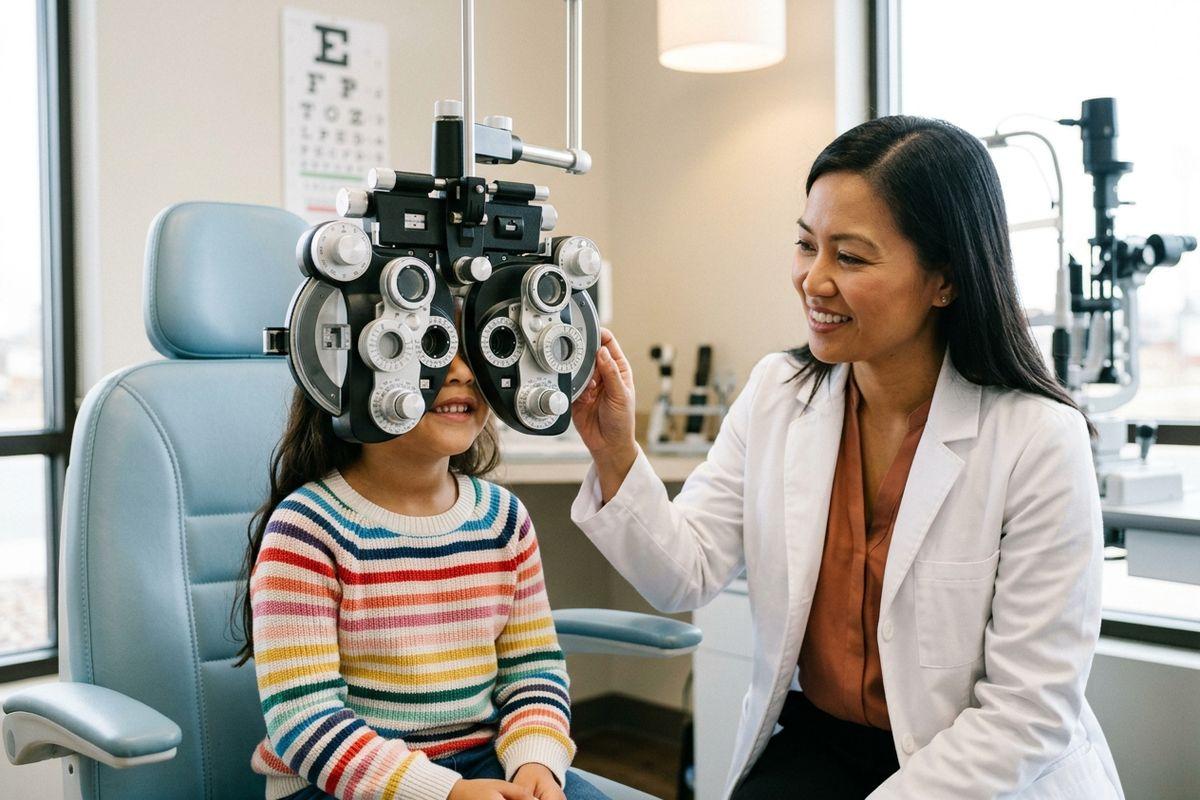
A pediatric eye exam is a thorough check of your child’s vision and eye health. It’s designed to catch problems early before they affect learning, development, or daily life. With back-to-school season around the corner, now is a practical time to make sure your child’s eyes are ready for the year ahead.
Signs Your Child May Need an Eye Exam
What to Watch for at Home
Kids often don’t know their vision is off because they assume everyone sees the way they do. That means it’s often up to their parents to realize that something’s wrong.
Look out for these signs:
- Squinting, rubbing their eyes often, or sitting unusually close to the TV or a screen
- Avoiding reading, losing their place on the page, or a short attention span during close-up tasks
- Eyes that cross, wander, or don’t seem to line up
Any one of these can point to a vision issue that’s worth checking out sooner rather than later.
When to Schedule Sooner
Some children have a higher chance of developing eye problems early. If any of the following apply to your child, don’t wait for symptoms to show up first.
- A family history of childhood eye conditions like myopia or amblyopia
- Premature birth or developmental delays
- A failed vision screening at school or at the pediatrician’s office
A failed school screening isn’t a diagnosis, but it is a clear signal to follow up with a full exam.
What Happens During a Pediatric Eye Exam
Age-by-Age Breakdown
The exam looks different depending on your child’s age, and that’s by design. Each stage focuses on what’s most relevant for your child’s current level of development.
- Babies: eye movement, pupil response, and alignment checks
- Ages 3 to 5: visual acuity and eye coordination tests using child-friendly tools
- School age: full eye chart testing, depth perception, and eye pressure checks
Even kids who can’t read yet can have a thorough, accurate exam. For young children, eye doctors use shapes, pictures, and other techniques that don’t require the ability to read. For a closer look at what an eye exam covers, the children’s eye exam page at Envision walks you through each part of the process.
Myopia in Kids: What Parents Should Know This School Year
How Myopia Shows Up in Children
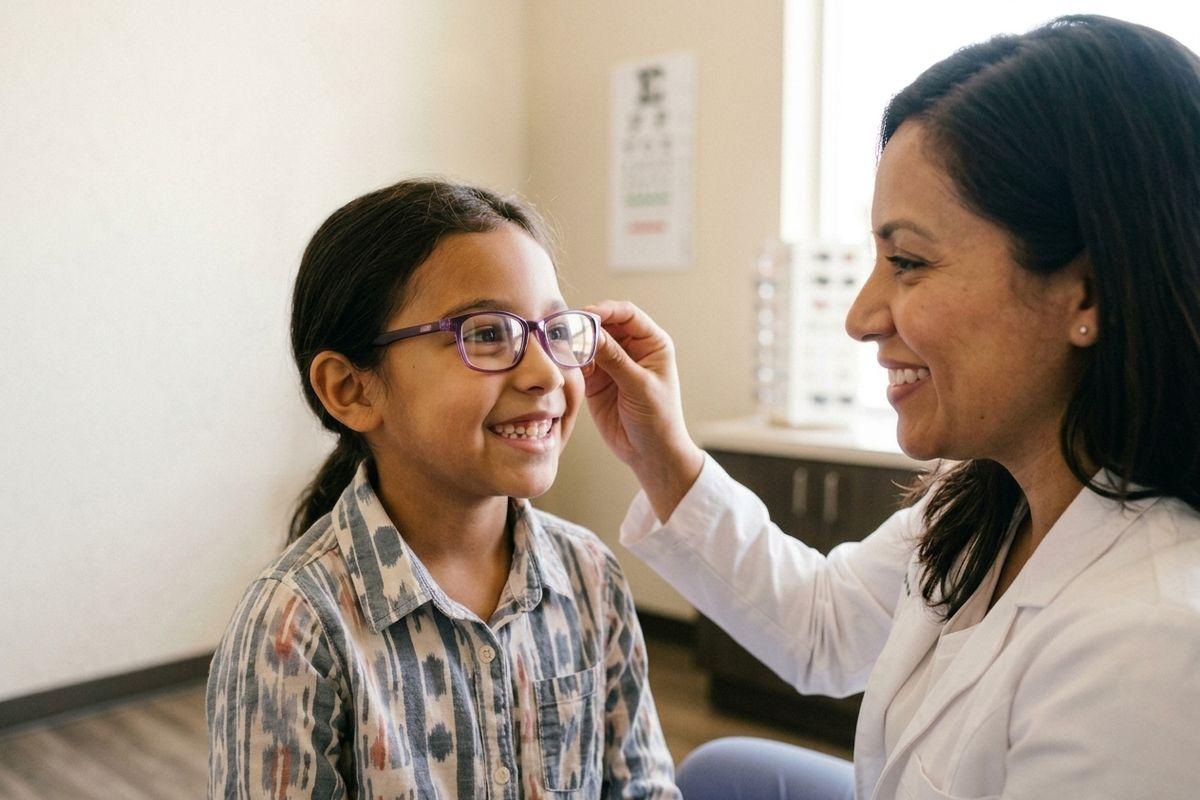
Myopia, or nearsightedness, is one of the most common vision problems in school-age kids, and it tends to progress during the school years. A child with myopia can see things up close just fine, but struggles with distance vision.
Factors associated with myopia progression include more time on screens and less time outdoors. Because kids spend so much time on devices today, many eye doctors are seeing myopia develop earlier and progress faster than in previous generations. Research projects that myopia could affect nearly half the world’s population by 2050, making early detection more important than ever.
Myopia Control Options Worth Asking About
There are several ways to help slow how quickly myopia progresses. Starting early gives your child more options in the long run. Our myopia control services include several approaches, and your child’s eye doctor will recommend one or more based on your child’s situation.
- Specialty contact lenses and prescription eye drops can help slow myopia progression in children
- Regular monitoring lets your child’s eye doctor track changes from one year to the next and adjust their approach as needed
- Starting myopia management earlier in childhood tends to offer more options compared to waiting
Myopia can’t always be prevented, but with the right care plan, its progression can often be managed. The MyKidsVision resource for parents also offers helpful tools for understanding your child’s risk and what management looks like in practice.
How Often Should Kids See an Eye Doctor in Aurora
The general recommendation for children is as follows:
- One eye exam between 6–12 months of age to check for basic eye health
- One eye exam between 3–5 years of age to check for things like eye teaming and vision clarity
- Yearly exams during the school years in order to keep on top of vision changes
Children who already wear glasses, show signs of myopia, or have a family history of eye conditions may benefit from more frequent visits. An eye doctor in Aurora who knows your child’s history can help set a schedule that makes sense for them.
At Envision Eye Care, Dr. Jeong and the team take time to get to know each patient and family. If your child is due for an exam before the school year starts, reach out to our team in Aurora to book an appointment and set your child up for a clear, comfortable school year.