


Key Takeaways
- Asian fit glasses, also called low bridge fit, are built around facial features rather than heritage.
- Frames sliding down your nose or resting on your cheeks often point to a bridge and pad mismatch.
- Low bridge frames use taller nose pads, a narrower bridge, and curved temples.
- Nose pads come as adjustable or built into the frame.
- An eye exam and an in-person fitting help you land on frames you can wear all day.
Some Faces Need a Low Bridge Fit
Asian fit glasses, also known as low bridge fit, are frames built with taller nose pads, a narrower bridge, and adjusted temple angles. They sit well on faces with a lower nose bridge or higher cheekbones. Our team at Envision Eye Care can help you compare standard and low bridge frame styles.
What Asian Fit Means
The name “Asian fit” is informal. It came from the eyewear industry, not from medicine, and many brands now label the same frames as low bridge fit.
These frames are designed around facial features, not heritage. Someone with a lower nose bridge or fuller cheeks may find them more comfortable no matter their background, and plenty of people of Asian descent wear standard frames without problems. What matters is the shape of your face, not the label on the box.
Signs Your Frames Don’t Fit Right
Poor fit tends to show up in small daily annoyances rather than one big moment. Watch for these signs:
- Your glasses slide down your nose, especially when you look down at your phone.
- Your frames rest on your cheeks and leave marks or smudges.
- The temples feel tight behind your ears or pinch the sides of your head.
- Lenses sit closer to your lashes than they should and pick up condensation.
Face Features Linked to Fit Issues
A low nose bridge gives your frames less to rest on, which allows gravity to pull down your frames. On the opposite side of things, high cheekbones push your frames up from below, causing your lenses to tilt.
A round or wider face can also leave standard temples feeling snug.
How Low Bridge Frames Are Built Differently
Set a pair of low bridge frames next to a standard pair and the differences are pretty easy to spot. The nose pads on a low bridge fit sit taller and larger, lifting the lenses away from your cheeks. The bridge itself is also narrower, giving the frames more grip where it counts.
The temples curve a little differently, and the front of the frames tilt at a slightly different angle, so that the lenses line up with your eyes instead of pointing toward your forehead.
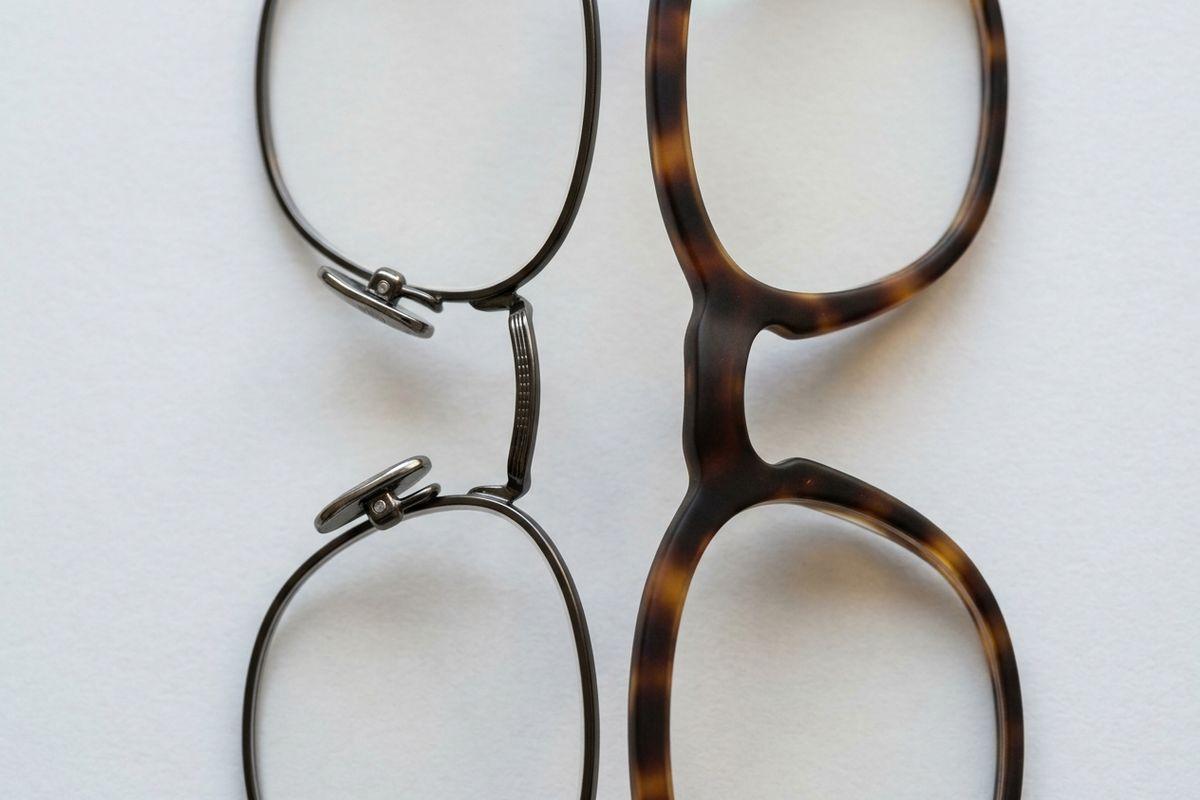
Adjustable vs. Built-In Nose Pads
Adjustable pads sit on small metal arms that an optician can bend to match your nose. Built-in pads are molded into the frame itself, and they hold their shape from day one.
Both can work well. The difference comes down to how much fine-tuning your frames need.
How to Find Frames That Fit Your Face
Shopping goes faster when you take these steps in order:
- Start with a current prescription.
- Check the frame measurements printed inside your existing frames, especially the bridge width and total width.
- Try your new frames on in person, then look down, smile, and walk a few steps to see if they stay in place.
Frame Shapes for Round Faces
Rectangular and angular styles add definition and keep a round face from looking softer than you’d like. Slightly wider frames help balance your proportions across the cheeks and temples.
Where to Shop for Low Bridge Fit Glasses in Aurora
Aurora is home to families from all over the world, and faces here come in every shape. Our optical team adjusts frames on site, so small tweaks to pads and temples happen while you wait. Book an eye exam with us in Aurora at Envision Eye Care, then take your time browsing frames that stay put.